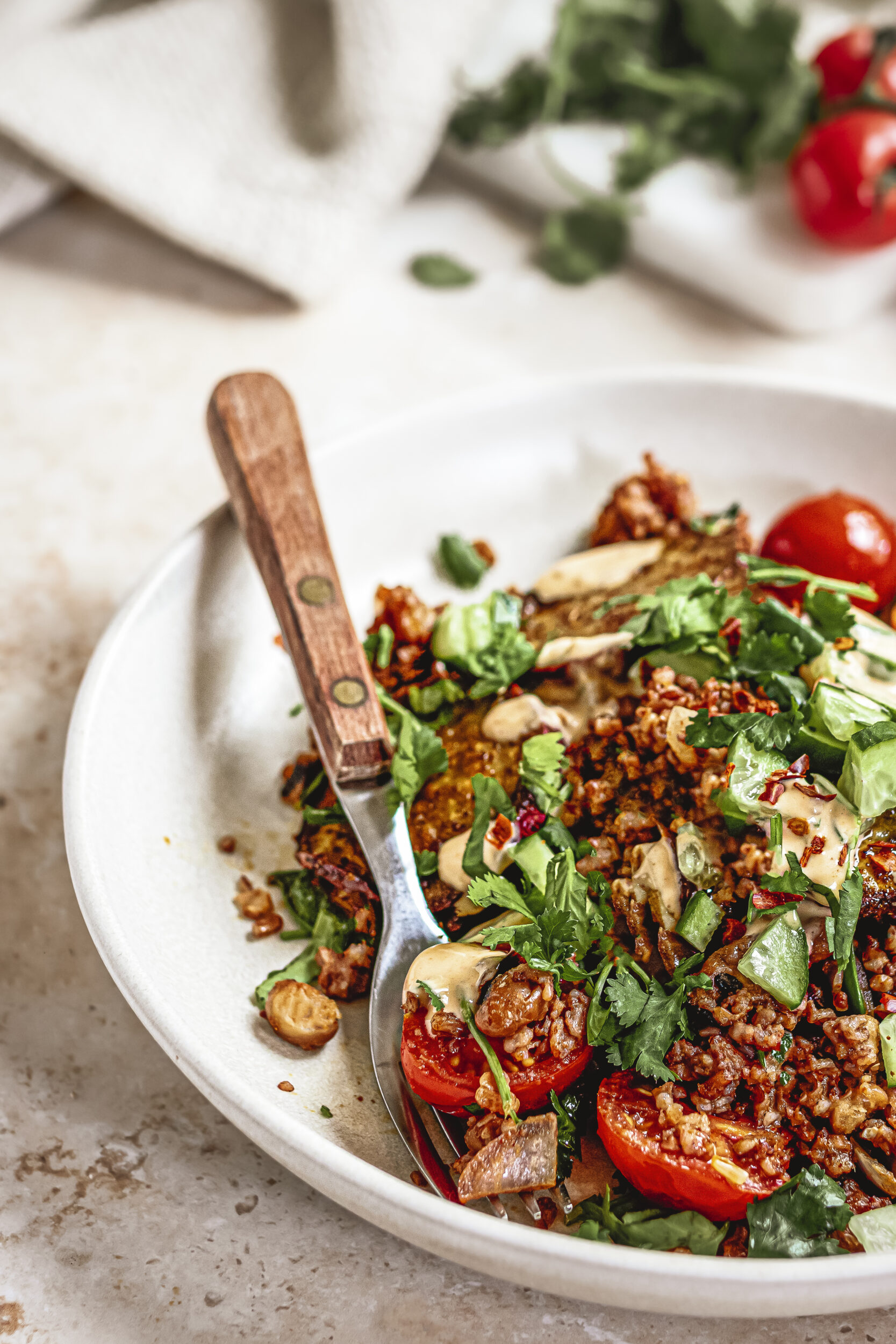
African Rice Salad
This African Rice Salad (Oryza glaberrima) salad celebrates Africa’s ancient, resilient grain. Paired with roasted sweet potatoes, cowpeas, and a bright lemon dressing, it’s a wholesome dish rooted in West African history and flavour. Simple, nourishing, and full of story.
In 2022, during a warm Johannesburg afternoon, I met my friend Abena, from Living the Ancestral way; a woman whose work is steeped in ancestry and preservation. She handed me two gift bags wrapped in brown paper, one for me and one for Jane. Inside were treasures of the land: seeds, spices, and grains that carried stories older than any of us.
Nestled between a packet of cowpeas and a packet of dried Bambara beans was a bag of something I didn’t recognise; small, reddish grains with a faint sheen. African rice, she said softly, smiling as if she was introducing me to a relative long lost. Its scientific name, Oryza glaberrima, sounded almost melodic, but what struck me most was its dignity. The grains looked alive like they remembered something ancient.
That moment stayed with me. This wasn’t just rice; it was history you could cook, a story of domestication, migration, and survival written into every grain. It had crossed rivers, borders, and centuries. It had fed kingdoms and sailed on ships. It had been carried in the pockets of the displaced and planted again in foreign soil by those who refused to forget where they came from.
To my friend, thank you for this gift, and for your work preserving what so easily could have been lost. Now it’s time to make African Rice Oryza Glaberrima Salad.
What Is African Rice (Oryza glaberrima)?
There are only two cultivated rice species in the world that humans have ever tamed. One is Oryza sativa, the white-grained Asian rice born in the river valleys of China. The other, far older in rhythm and spirit, is Oryza glaberrima; the indigenous African red rice, a grain that carries within it the history of African rice and the legacy of those who first learned to coax life from the floodplains.
Long before ships, borders, and trade routes, this African cultivated rice was born from the wild rice ancestor Oryza barthii — a grass that once grew freely across the wetlands of ancient West Africa. Somewhere along the Inland Niger Delta, farmers began saving seeds from plants that held their grain a little longer, that stood stronger against wind and rain. Over generations, through this quiet partnership of patience and soil, Oryza glaberrima was domesticated, one of humanity’s earliest and most remarkable acts of plant domestication.
From Mali, its homeland, African rice cultivation spread like a whisper across West Africa through Senegal, Ghana, Togo, Nigeria, and beyond. In these lands, African farmers, many of them women, learned to read the grain like scripture: by colour, shape, and texture. Theirs was not just agriculture but artistry, a living expression of connection between people and earth.
Oryza glaberrima is no ordinary grain. It is pest-resistant, drought-resistant, and disease-resistant. It thrives in iron-rich soils and survives in poor ones. Whether the rains come or not, the rice plant bends but does not break. Its genome, shaped by centuries of adaptation, tells a story of endurance, one that scientists still study today to understand rice domestication and resilience.
When Portuguese sailors reached the West African coast in the late 1400s, they were astonished by what they saw: vast rice fields, carefully engineered dykes, and a system of rice cultivation that rivalled anything in Asia. African farmers had already developed their own domesticated rice, their own agricultural science living proof of Africa’s deep domestication history and ingenuity.
By the 1500s, Oryza glaberrima had already begun its ocean-crossing journey first to Brazil, then to South Carolina in the 1700s carried in the hands and memories of enslaved Africans. In Suriname, the descendants of the Maroons still cultivate African rice today, growing it as both food and ancestral offering, a seed that keeps their story rooted.
Over time, Asian rice (Oryza sativa) spread across Africa and took over most farms, it yielded more and milled more easily. Yet the domesticated African rice never vanished. In the marshy fields of southern Senegal, the Jola women still guard its varieties, saving seeds and passing them from hand to hand. They can tell one type from another simply by the colour of the bran, the number of grains in a spikelet, or the way the stalk bends in the wind.
And while the world turns towards mechanised farming and hybrid crops, these women continue to cultivate wild and cultivated African rice with quiet reverence, not merely to feed their families, but to keep memory alive.
So what is African rice?
It’s the origin of African domestication, a bridge between ancient soil and future harvests.
It’s knowledge in a kernel, bred for hard days and lean lands.
It’s the food for the future — a grain that thrives where others fail.
A gift from ancient West African farmers, who mastered the art of resilience long before history thought to write their names down.
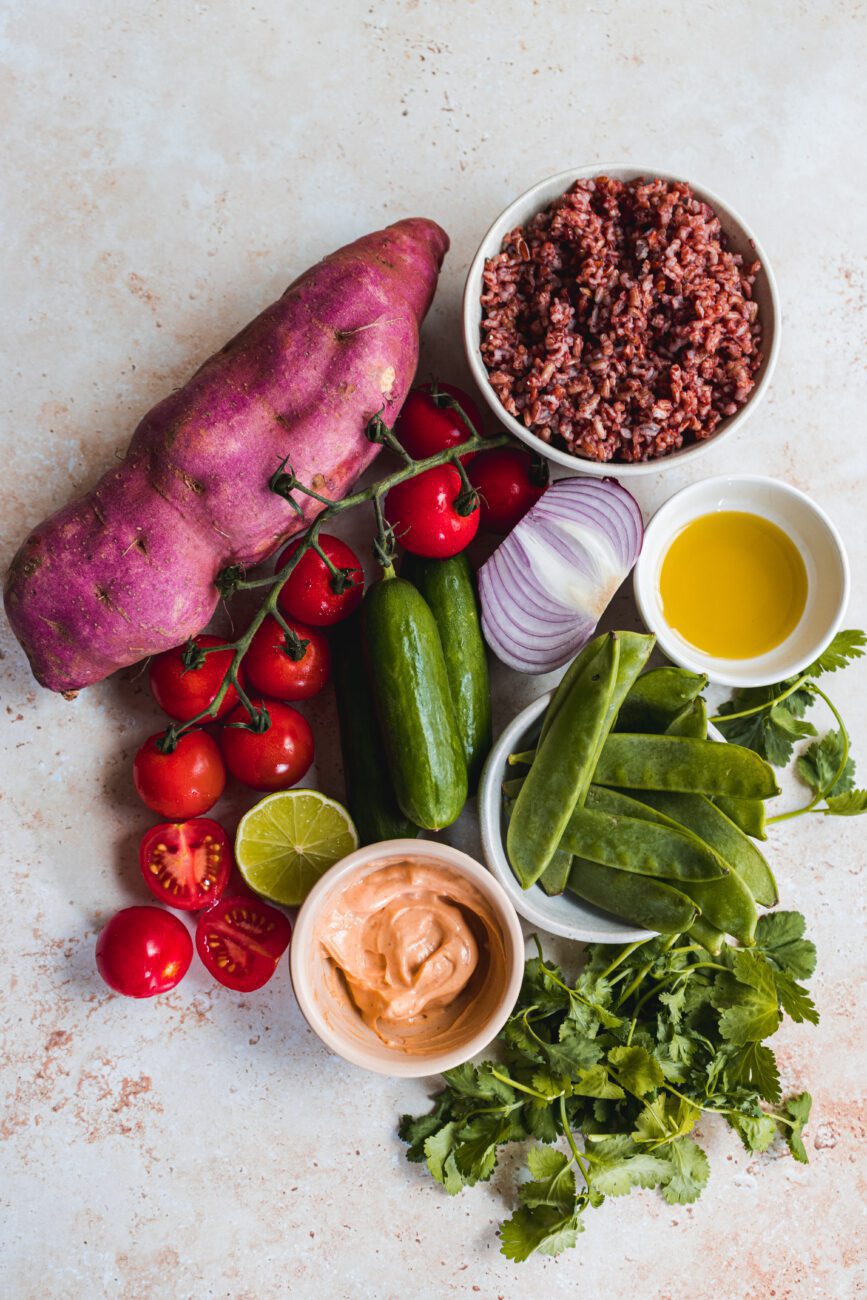
Here’s what you’ll need to make African Rice Salad
This is a forgiving, flexible recipe. Swap vegetables for what’s in season, and don’t be afraid to play with herbs or add a handful of nuts or seeds for extra texture. The spirit of this dish is generosity — use what you have, and let it taste like home.
Similar Posts to Explore
Did you make this African Rice salad recipe?
If you made our African Rice Salad, o rate this recipe and leave a comment below, your words help more people discover this beautiful grain. Save it on Pinterest for later.
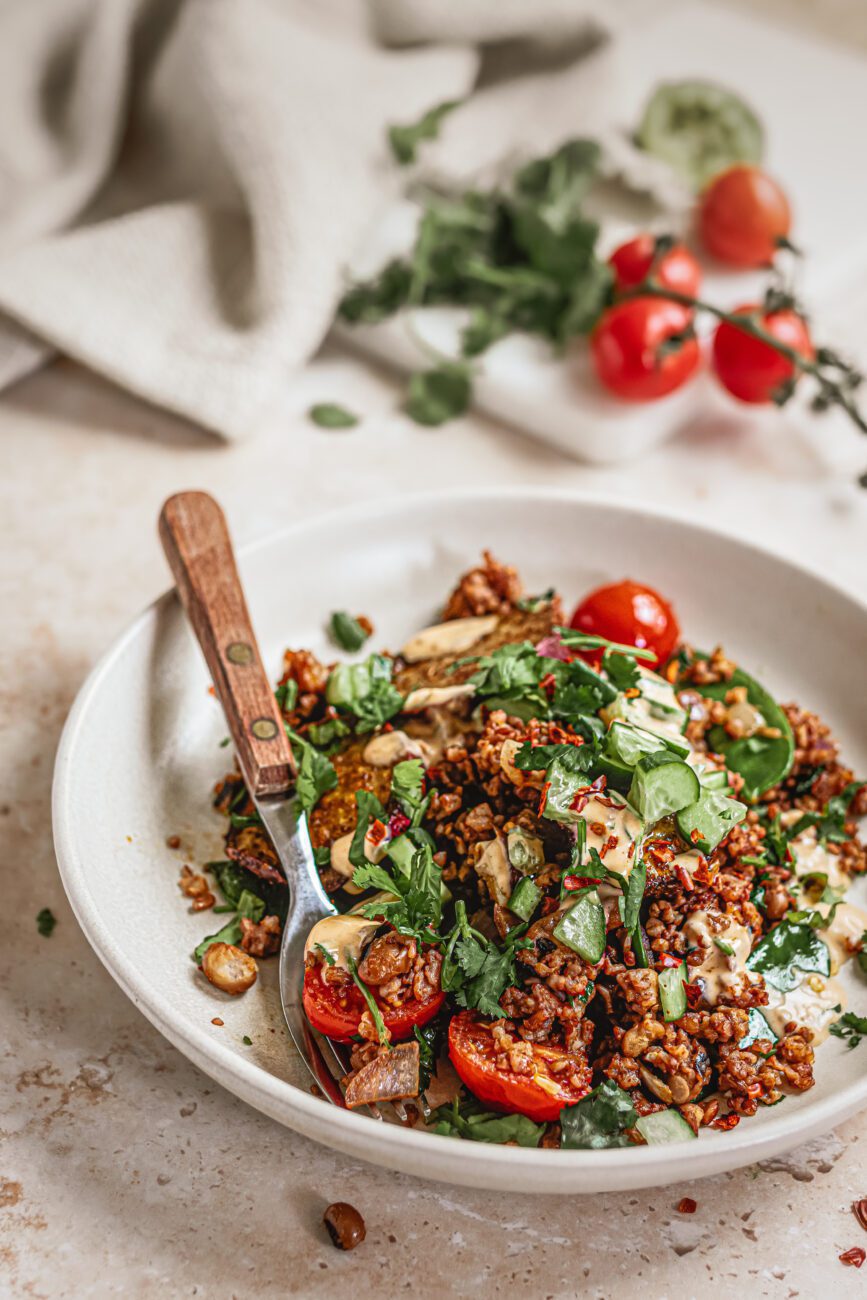
African Rice Salad (Oryza glaberrima)
Equipment
- Medium saucepan or pot to cook the African rice (Oryza glaberrima).
- Fine-mesh sieve or colander for rinsing the rice.
- Baking tray lined with parchment paper to roast the sweet potatoes.
- Mixing bowls one large for tossing the salad and one small for the dressing.
- Non-stick frying pan or skillet for sautéing the onions, garlic, and vegetables.
- Wooden spoon or spatula to stir and combine gently.
- Measuring cups and spoons for accurate portions.
- Sharp knife and chopping board – to prepare vegetables and herbs.
- Whisk or fork for blending the dressing smoothly.
- Serving bowl or platter to present your salad beautifully.
Ingredients
To Cook Cowpeas from Dry
- ½ cup dry cowpeas — 100 g
- 3 cups water for soaking and cooking — 720 ml
For the Salad
- 1 cup African rice Oryza glaberrima — 190 g
- 2 cups water — 480 ml
- Salt to taste — 1 g
- 1 medium sweet potato cubed — 250 g
- 1 tbsp olive oil for roasting — 15 ml
- ½ tsp paprika — 1 g
- 1 tsp ground cumin — 2 g
- ½ tsp chilli flakes — 1 g
- 1 tsp olive oil for sautéing — 5 ml
- ½ red onion diced — 60 g
- 2 cloves garlic minced — 6 g
- ¼ cup snow peas sliced — 40 g
- ½ cup cherry tomatoes chopped — 80 g
- ⅓ cup cooked cowpeas — 65 g
For the Dressing
- 2 tbsp mayonnaise — 30 g
- Juice of ½ lemon — 15 ml
Optional Toppings
- ¼ cucumber diced — 40 g
- 2 tbsp fresh coriander chopped — 5 g
Instructions
How To Cook Cowpeas
- Cook the Cowpeas: Soak ½ cup (100 g) dry cowpeas in 3 cups (720 ml) water overnight.
- Drain, rinse, and add to a pot with 3 cups fresh water. Bring to a boil, then reduce heat and simmer for 35–40 minutes, until tender. Drain and set aside.
- Cook the African Rice: Rinse 1 cup (190 g) of African rice thoroughly in a fine sieve. Add 2 cups (480 ml) water and a pinch of salt to a medium saucepan.
- Bring to the boil, then reduce the heat to low, cover, and simmer for 20–25 minutes, or until the water is absorbed and the grains are tender. Fluff with a fork and set aside to cool slightly.
- Roast the Sweet Potato: Preheat the oven to 200°C (400°F). In a bowl, toss the cubed sweet potato with 1 tbsp olive oil, paprika, cumin, and chilli flakes.
- Spread evenly on a parchment-lined tray and roast for 25–30 minutes, turning halfway through until tender and golden.
- Sauté the Vegetables: Heat 1 tsp olive oil in a non-stick pan over medium heat. Add the diced onion and minced garlic; cook for 2–3 minutes until fragrant and translucent. Add the mange tout (snow peas) and cook for 2 minutes more.
- Stir in the cherry tomatoes and cooked cowpeas; season lightly with salt and cook for another 3–5 minutes. Remove from heat and let it cool slightly.
- Make the Dressing: In a small bowl, whisk together mayonnaise and lemon juice until smooth and creamy.
- Assemble the Salad: In a large bowl, combine the cooked African rice, roasted sweet potatoes, and sautéed vegetables. Drizzle over the lemon-mayo dressing and toss gently to coat evenly.
- Taste and adjust seasoning: Add a squeeze more lemon or a pinch of salt if needed. Garnish with diced cucumber and fresh coriander.