Mango Amaranth Pudding
This creamy Mango Amaranth Pudding is a nutritious, plant based, and naturally gluten free breakfast or dessert alternative to traditional rice pudding. Made by simmering ancient amaranth seeds until tender and folding them into a sweet mango and vegan yogurt blend, it delivers a protein rich, gut friendly treat packed with essential minerals. Read on to discover how to use this incredible African ingredient, along with our step by step recipe.
Growing up in Venda, I knew amaranth as a leafy green.
It appeared in everyday meals often enough that I never stopped to think much about it. Like many foods we grow up with, it simply existed. It wasn’t trendy, It wasn’t called a superfood and It was just food.
That’s the funny thing about familiar ingredients. We assume we know them. Then one day, they surprise us.
Mine came in the form of a tiny seed.
I still remember my reaction when I learned that the seeds of the amaranth plant could be eaten. If someone had handed me a bowl of amaranth seeds as a child and asked me what they were, I probably wouldn’t have known. Yet there they were years later, appearing in health food shops, recipe books, and wellness articles. Suddenly, amaranth was being praised as a gluten free grain rich in protein, calcium, magnesium, and dietary fibre. People were calling it an ancient grain. Nutritionists were celebrating it as a complete protein.
The seed hadn’t changed. My understanding of it had.
Perhaps you’ve experienced this too. A fruit, vegetable, or herb that sat on your grandmother’s table for years suddenly reappears in a cookbook or supermarket aisle with a new story attached to it. The ingredient is the same. The way people see it is different.
A Different Kind of Discovery
That thought came back to me during a conversation with my friend Chef Jane.
She often tells the story of how her family discovered amaranth growing near the township where they first settled after arriving in South Africa. Her friends know the story so well they could probably tell it themselves. But what stays with her isn’t the plant itself. It’s what that discovery taught her.
When we were discussing amaranth recently, she mentioned an old joke many Africans know well about Europeans “discovering” places that already had people, homes, languages, and histories. People laugh because it’s absurd.
Yet food has a way of telling similar stories. The world often overlooks things until someone else points out their value.
Amaranth is one of those ingredients. Across Africa, the leaves are cooked into stews, broths, and everyday meals. But once the plant begins producing seeds, they are often forgotten. Meanwhile, those same amaranth seeds are packaged, marketed, and sold around the world as a premium health food.
The seed didn’t change. The story around it did.
For Chef Jane, rediscovering ingredients like amaranth has transformed the way she cooks. Instead of searching for inspiration elsewhere, she finds herself looking more closely at foods that have always been part of African food traditions. Ingredients that fed communities long before they became fashionable. Ingredients with stories worth telling.
This Mango Amaranth Pudding is one of those stories.
What Is Amaranth?
Although many people refer to amaranth as a grain, it is technically a pseudocereal or a seed.
For centuries, amaranth has been cultivated and enjoyed across the globe, including Africa, Central America, and South America. The plant is remarkably versatile. Its leaves are cooked as vibrant green vegetables, while the seeds can be boiled into porridge, popped like popcorn, ground into flour, or used in recipes like this creamy pudding.
One of the reasons amaranth has become a staple in health food circles is its exceptional nutritional profile. Unlike true grains, amaranth contains all nine essential amino acids, making it a complete protein. It is also an excellent source of calcium, magnesium, iron, and dietary fibre.
What I find most fascinating, however, isn’t its nutrition. It’s how many people know the leaves intimately but have never considered eating the seeds. That was certainly true for me growing up in Venda.
A Fresh Way to Enjoy Amaranth seeds
At first glance, this dish resembles a creamy rice pudding. Then the first spoonful takes it in a completely different direction.
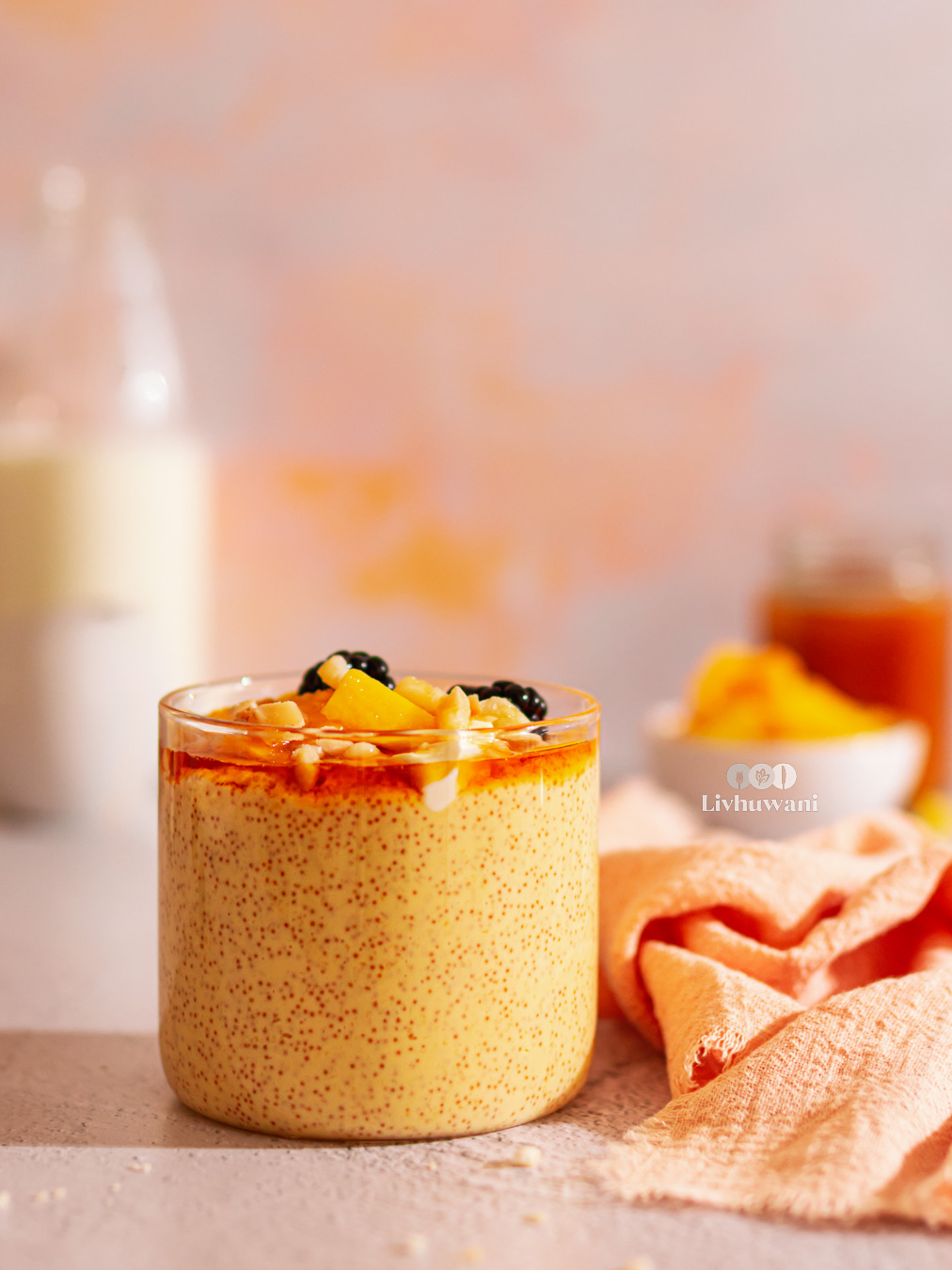
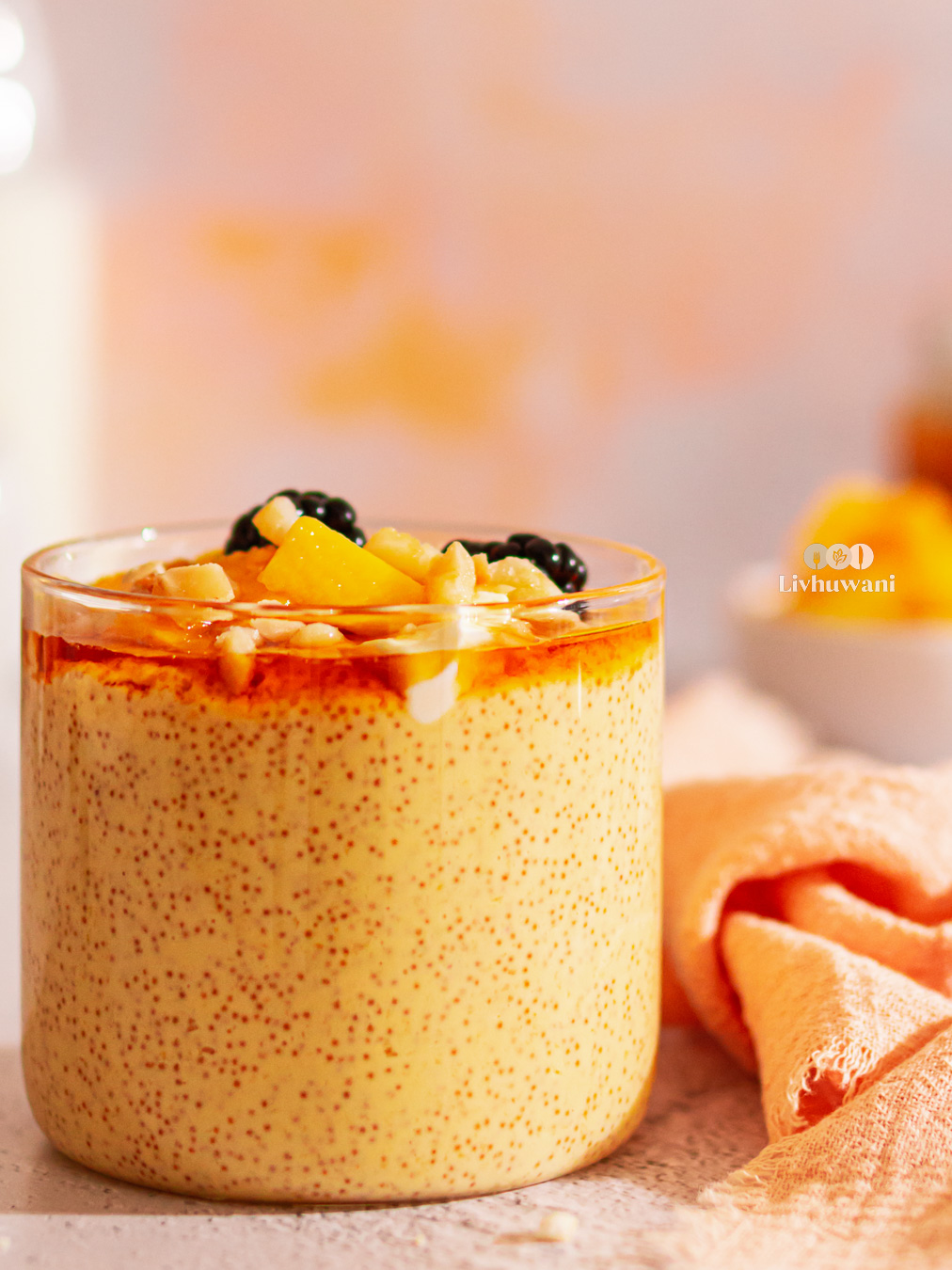
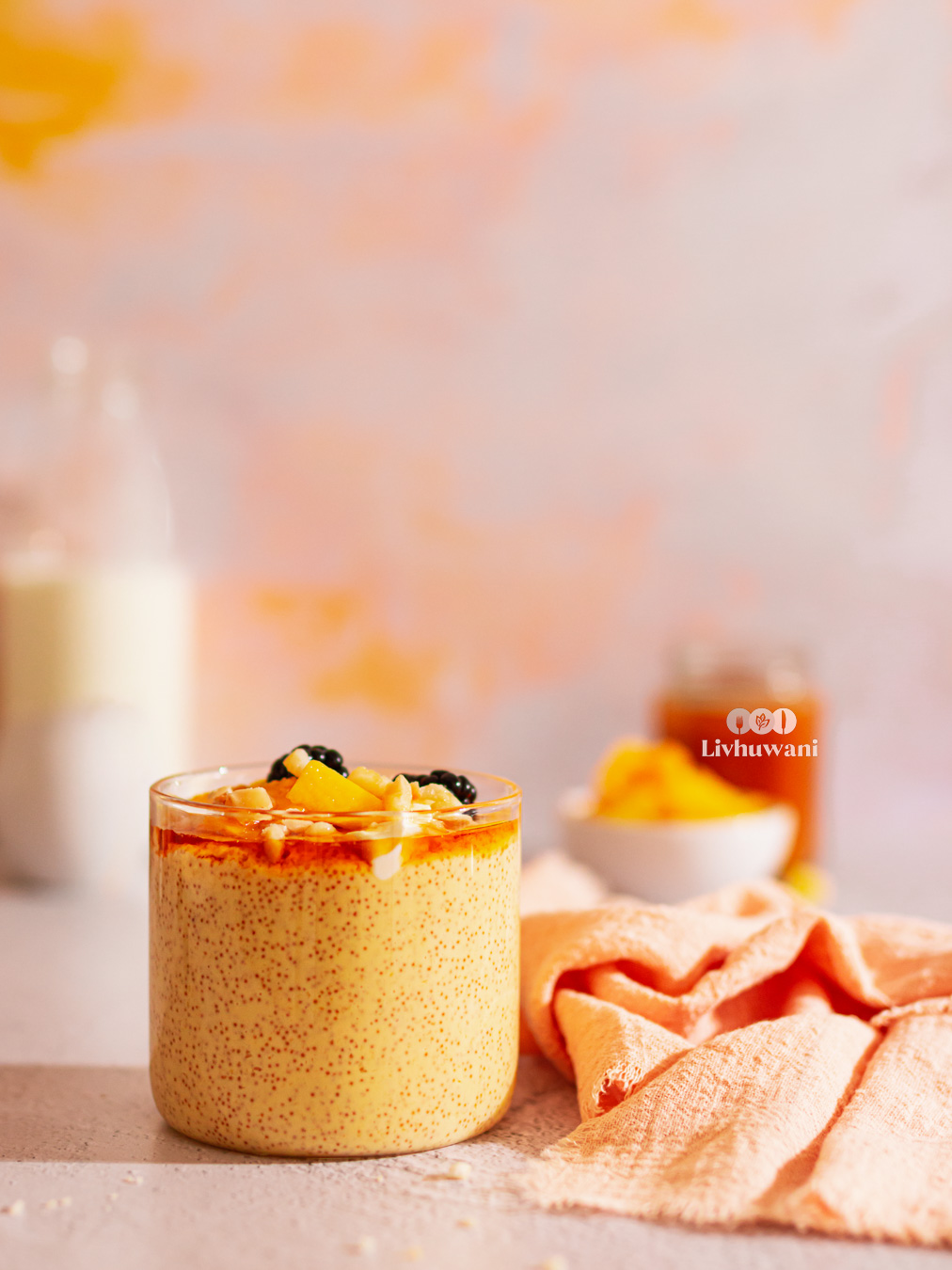
The amaranth seeds are simmered until soft and creamy, creating a pudding with a delicate texture and a subtle nutty flavour. Sweet mango puree brings brightness and fruitiness, while plant based yogurt adds a gentle tang. A drizzle of maple syrup rounds everything out with just the right amount of sweetness.
Layered into jars or bowls and topped with fresh berries and coconut flakes, the finished pudding feels colourful, nourishing, and deeply satisfying. The creamy amaranth, juicy fruit and crunchy toppings make every spoonful a little different from the last.
Call it breakfast. Call it dessert. Either way, it’s the kind of dish that usually sparks a question.
“What is this made from?”
And my favourite question of all: “You can eat the amaranth seeds?”
I smile every time I hear it. Because not so long ago, I was asking exactly the same thing.
Why you’ll love this Mango Amaranth Pudding
What are the ingredients for amaranth pudding?
Variations you can try!
Want to mix things up? Try these simple ingredient swaps:
- Chocolate Amaranth Pudding: Stir in cocoa powder and a splash of vanilla extract.
- Pear and Cinnamon: Top your pudding with warm poached pears and a dust of cinnamon.
- Cherry Almond: Layer with sweet cherries and top with toasted flaked almonds.
- Cardamom Mango: Blend a pinch of ground cardamom into the mango puree for a beautiful aromatic twist.
- Berry Coconut: Double up on the fresh berries and toasted coconut flakes for a bright summer version.
Faqs on Amaranth Pudding
Final Thoughts
The first time I learned that amaranth seeds could be eaten, I felt as though I was meeting an old friend for the first time. The plant had been part of my life for years, yet there was still something new to discover.
That’s what I love most about food. No matter where we come from, there is always another story waiting beneath the surface. This mango amaranth pudding is one of those stories, a simple bowl made from an ingredient that has nourished people for generations, now finding a fresh new place at the table.
Save this Mango Amaranth Pudding for later!
Creamy, fruity, and nourishing, this mango amaranth pudding is the perfect gluten-free treat for breakfast or dessert. Pin it now and enjoy later!

How to make Amaranth Pudding
Equipment
- Medium saucepan
- Wooden spoon or silicone spatula
- Blender or hand blender
- Measuring cups & spoons
- Serving jars or glasses
- Fridge (to chill before serving)
Ingredients
- 5 cups water
- ⅛ tsp salt used sea salt
- 190 g amaranth seeds
- ½ cup frozen mango peeled, diced, and frozen
- ½ cup yogurt (such as vegan coconut or almond yogurt) or dairy if you are non-vegan
- ¼ cup maple syrup or honey, plus extra for drizzling
- blackberries or raspberries, or seasonal fruit, for topping
- nuts such as almonds or coconut flakes for garnish, chopped
Instructions
- Cook the amaranth: Pour the water into a medium saucepan and bring it to a boil over medium heat. Add the sea salt and amaranth seeds. Reduce the heat to low, cover, and let everything simmer gently for about 30 minutes. As the amaranth cooks, the seeds will soften and absorb the water, creating a thick, creamy texture.
- Cool completely: Remove the saucepan from the heat and allow the cooked amaranth to cool down completely. For an even thicker, more pudding like consistency, prepare the amaranth a day ahead and chill it in the fridge overnight.
- Blend the mango mixture: Add the frozen mango, vegan yogurt, and maple syrup to a high speed blender. Blend until completely smooth, creamy, and silky, ensuring no large pieces of fruit remain.
- Combine and assemble: Transfer the smooth mango mixture to a large bowl and gently fold in the cooled amaranth until evenly combined. Spoon the pudding mixture into serving jars, glasses, or bowls..
- Add the toppings: Scatter the fresh berries over the top of each portion and finish with a generous sprinkle of coconut flakes and chopped nuts. For extra sweetness, drizzle with a little additional maple syrup just before serving.
- Chill and serve: Refrigerate the assembled jars for at least 30 minutes to allow the flavours to develop and the pudding to firm up slightly (optional). Serve chilled.